If you're new to the Reformer, you've probably already been told to bring socks. Not trainers. Not bare feet. Socks. And if you've googled it, you'll have seen the phrase reformer pilates socks everywhere. So do you actually need grip socks for Reformer Pilates, or is that just studio etiquette? Short answer: for most beginners, yes – grip socks are the simple, practical choice. Here's why, what to look for, and which HEXXEE pairs we'd start with.
Browse the full range in our Reformer Pilates socks collection whenever you're ready. This guide is for beginners who want a clear, no-fuss explanation before class.
What makes Reformer Pilates different for your feet?
Reformer Pilates isn't a treadmilly cardio session. You're on a sliding carriage, pushing and pulling against springs, often with one foot planted while the other moves, or both feet pressing into the footbar. Your feet are doing a lot of quiet work: pressing, pointing, flexing, and holding positions while the rest of your body stays controlled.
That means two things for beginners:
- Stability matters. If your foot slips on the carriage or footbar, you lose the line of the exercise and your form goes with it.
- You're often sock-only. Most UK Reformer studios ask you not to wear trainers on the machine. Bare feet are sometimes fine for mat work, but on the Reformer's padded and vinyl surfaces, socks are the usual middle ground – and grip socks are what keep that middle ground secure.
That's the heart of why people search for reformer pilates socks before their first class. You want something that stays put so you can focus on the movement, not on your foot sliding halfway through a lunge or footwork series.
Do you need grip socks for Reformer Pilates?
For a beginner, we'd say yes – grip socks are worth it from day one. You don't need them because Reformer is dangerous without them. You need them because they make the session cleaner, safer-feeling and less distracting.
Here's what grip socks actually help with on the Reformer:
- Traction on the carriage and footbar. Our Reformer Pilates socks use full-sole honeycomb grip from heel to toe, designed to maximise contact with the Reformer so your foot stays planted during controlled movements.
- Better control in transitions. Beginners change positions a lot – lying down, sitting, kneeling, standing on the carriage. Grip helps your foot land and stay where you meant it to.
- Studio-friendly hygiene. Sharing equipment is part of class life. Socks are simply nicer for you and for the next person on that carriage.
- A bit of cushioning. Reformer work isn't high-impact like skipping, but your feet still press hard into the footbar and straps. Zoned cushioning at the forefoot and ankle takes some of that pressure without adding bulk.
Could you do a class in ordinary crew socks? Sometimes. Will they feel as secure when the springs get heavier or you're balancing on one foot? Usually not. That's why most studios nudge beginners towards grip socks rather than regular gym socks.
Grip socks vs bare feet vs trainers
Bare feet
Some instructors are fine with bare feet on the mat. On the Reformer, bare feet can feel sticky one minute and slippery the next, depending on how warm your feet are and how the carriage surface feels. Plenty of people prefer the consistent layer of a sock.
Trainers
Trainers are rarely welcome on the Reformer itself. They're bulky for precise foot placement, and studios generally want to keep trainers off the carriage. Save them for the walk to class.
Grip socks
This is the Reformer default for a reason. You get coverage, hygiene and traction without the bulk of a shoe. If you're buying one dedicated kit item before your first block of classes, make it a pair of reformer pilates socks with a proper grip sole.

What to look for in Reformer Pilates socks
Not every "grip sock" is built the same. For Reformer work, these are the features we'd prioritise:
1. Full-sole grip, not a few dots
Reformer sessions use the whole foot – heel presses, toe presses, and everything in between. A high-density honeycomb grip across the entire sole gives you more contact than a sparse pattern of rubber dots. Our Reformer Pilates range is built around that full-sole idea.
2. A secure, locked-in fit
If the sock twists or slides around your foot, the grip on the outside can't do its job. Look for a compressive arch band and a fit that moves with your foot. HEXXEE Reformer pairs use a secure arch support so the sock stays aligned during longer holds and transitions.
3. Breathable cushioning without bulk
You want enough padding at the forefoot and ankle to take pressure, without a thick hiking-sock feel. Soft terry panels and a performance cotton blend keep things comfortable when the studio warms up.
4. Easy care
You'll wash these a lot. Our care advice is the same as for our other grip socks: machine wash cold (max 30°C) or hand wash, no bleach, no boiling, and hang dry. That protects the HEX-TECH PVC grip pads. For a fuller walkthrough, see our guide on how to wash grip socks and gym socks.
HEXXEE Reformer Pilates socks we'd start with
Everything below is ACTIVE in our Reformer Pilates socks collection, made with the same performance recipe: 70% Dry fit Polyester, 20% Cotton, 10% Elastane, plus HEX-TECH PVC grip pads.
- White Reformer Pilates Rubber Socks – the clean, classic beginner pair. Built specifically for Reformer Pilates with full-sole honeycomb grip, precision stability and zoned cushioning. If you want one pair that just works in any studio, start here.
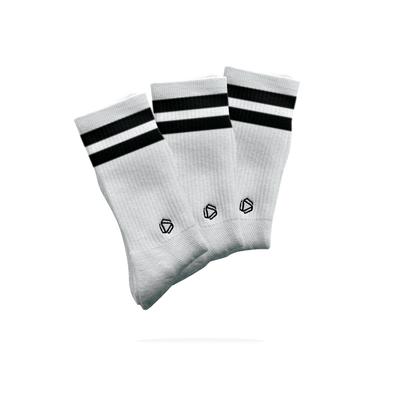
- White Reformer Pilates Rubber Socks x3 – same sock, three pairs. Handy if you're going twice a week or more and don't want to wash and dry overnight every time.
- Lattes And Pilates – for when caffeine comes first and core comes later. Same Reformer-ready grip and fit, with a fun studio-friendly design.
- Pilates Icons – because basics are fine, but icons are better. Another full-grip Reformer option if you want a bit more personality than plain white.
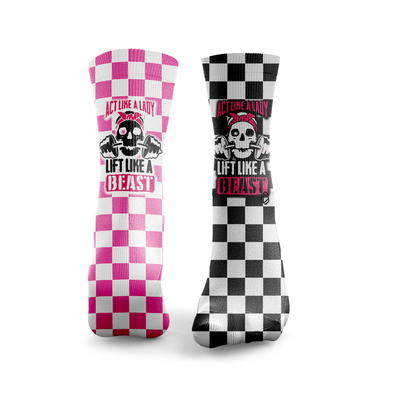
Also worth a look if you like a stronger vibe: Strong Girls Club and Relax sit in the same collection with the same technical features.
If you already train in the gym as well as on the Reformer, our wider performance-enhancing grip socks cover lifting, CrossFit-style sessions and sock-only studio work. For a broader overview of sports socks in general, our best sports socks guide is a useful next read. And if your week also includes field sports, we've covered when rugby grip socks actually help (and when they don't).
Beginner tips for your first Reformer class
- Pack grip socks before you leave the house. Studios sometimes sell them, but sizes and stock vary. Having your own pair ready removes one pre-class stress.
- Arrive a few minutes early. Get settled, put your socks on, and ask the instructor if there's anything specific they prefer for foot placement.
- Start light on the springs. More resistance isn't always better when you're learning. Grip socks help, but control still comes from how you press into the footbar.
- Keep a spare pair in your bag. Sweaty socks mid-day are no fun if you're heading to a second class. A multipack solves that quietly.
- Wash them properly. Cold wash, hang dry, skip the bleach. Your grip pads will thank you.
What about compression?
You'll see "compressive arch band" on our Reformer product pages – that means a snug, locked-in fit around the arch so the sock doesn't twist. It is not the same thing as medical compression stockings, and HEXXEE socks aren't sold as medical compression. If you're curious about the wider compression-sock conversation for gym and recovery, we've written an honest take in do compression socks help?
So… do you need them?
If you're starting Reformer Pilates in the UK, grip socks are one of the easiest wins you can buy. They keep your feet planted on the carriage, they keep studios happy, and they let you think about your core instead of your slipping heel. Ordinary socks can work in a pinch. Dedicated reformer pilates socks with full-sole grip work better, especially when you're still learning the machine.
Ready to pick a pair? Head to the Reformer Pilates socks collection, grab a white pair or something with a bit more personality, and show up to class feeling sorted.
FAQ: Reformer Pilates socks for beginners
Do you need grip socks for Reformer Pilates?
Most beginners benefit from them. Grip socks help your feet stay planted on the carriage and footbar, which makes controlled movements easier and less distracting. Many UK studios expect socks on the Reformer rather than trainers or bare feet.
Can I wear normal socks to Reformer Pilates?
You can, but normal socks often slide on the carriage. A pair with full-sole grip is more secure for footwork, lunges and one-legged positions.
Are Reformer Pilates socks the same as yoga socks?
They're closely related – both favour grip and sock-only studio work – but Reformer socks are built for the sliding carriage and footbar. Our Reformer range uses full-sole honeycomb grip designed for that machine.
What size grip socks should I buy?
Check the size chart on each product page and match your usual UK shoe size. A snug fit matters more than a loose one, because the grip only works if the sock stays aligned on your foot.
How do I wash Reformer Pilates grip socks?
Machine wash cold at no more than 30°C, or hand wash. Don't bleach or boil them, and hang them to dry so the grip pads stay in good shape.