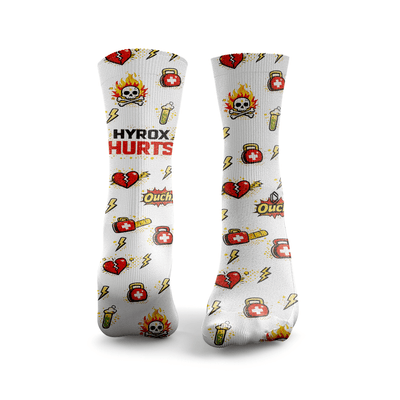
Do compression socks help? It's one of those questions that pops up in every gym group chat, usually right after someone turns up to a HYROX sim in knee-high socks that look like they could hold back a flood. The honest answer is: sometimes, a bit, for some people, and not in the magic way the marketing usually suggests. This guide walks through what compression socks actually are, where they might be worth wearing, where they probably aren't, and what you really need from a pair of socks for CrossFit, HYROX, running and lifting.
Quick disclaimer before we start: we make gym socks, not medical kit. If you've got a circulation problem, swelling, a history of blood clots, diabetes or anything else going on with your legs, speak to your GP or pharmacist before buying compression stockings. Nothing here is medical advice.
What are compression socks?
Compression socks are tight, stretchy socks designed to squeeze the foot and lower leg. The proper ones are "graduated", which means they're tightest at the ankle and get gradually looser up the calf. They come in two broad camps:
- Medical compression stockings – prescribed or recommended by a health professional, made to specific standards and fitted carefully. These are a treatment, not a fashion choice.
- Sports compression socks – sold to runners, triathletes and gym-goers, usually knee-high, aimed at how your legs feel during and after training.
Then there's a third category people often lump in with them: regular athletic socks with a snug fit and an arch band. These feel supportive and secure, but they aren't the same thing as a graduated compression stocking, and it's worth being clear about the difference.
Do compression socks help with performance?
This is where we'll be straight with you. Plenty of athletes swear by compression socks, and plenty of others have never worn a pair and still hit PBs. The research on performance benefits is mixed, and you won't suddenly run faster, row harder or lift heavier just because your calves are being hugged.
What a lot of people do report is that their legs feel better: less "heavy", a bit more supported on long runs or long days on their feet. That feeling is real for them, and if it gives you confidence going into a race, that counts for something. Just don't expect a pair of socks to replace training, sleep and food.
Running and HYROX
Endurance athletes are the biggest fans of compression socks, and HYROX has brought them into gyms in a big way. If you're doing a lot of running mileage, you might like how they feel on long efforts. The trade-offs are that they're hot, they take a while to get on (not ideal if you're changing in a cramped warm-up area), and a badly fitted pair can dig in behind the knee.
For HYROX specifically, most of what goes wrong with feet on race day isn't about compression at all. It's about blisters from 8km of running in a sweaty sock, slipping inside your shoe on sled pushes, and getting the sock length right for wall balls and burpee broad jumps. We've covered that in our guide on how to stop blisters in CrossFit and HYROX, and you'll find race-ready pairs in our HYROX socks collection.
CrossFit and functional fitness
In a typical CrossFit class you're jumping, lifting, climbing a rope and running out the door and back. Tall knee-high compression socks can feel restrictive in deep squats and pistols, and they don't do anything to protect your shins on rope climbs or deadlifts the way a thicker crew sock can. For most people in a box, a well-cushioned, snug crew sock is more useful day to day. Have a look at our CrossFit socks if that's you.
Lifting
For strength training, compression is pretty much irrelevant. What matters more is a stable, grounded foot in your shoes (or a grippy sole if you're lifting in socks), and enough length to stop the bar scraping your shins. Compression isn't going to add kilos to your squat.

Do compression socks help recovery?
Recovery is the other big reason people buy them. Pulling on a pair after a long run, a big leg day or a competition is a popular ritual, and some people find their legs feel less achy the next day. Again, the evidence isn't a slam dunk, so think of compression socks as a "might feel nice" extra rather than a recovery strategy.
If you're trying to recover better, the boring stuff wins every time: sleep, enough protein and food overall, sensible training volume, some easy movement on rest days and staying hydrated. If you then want to wear compression socks on the sofa, go for it.
Compression socks for travel and long days on your feet
Lots of people wear compression socks on long flights, coach trips or long shifts standing up, and this is where many health services do talk about them, particularly for people at higher risk of blood clots. That's exactly the territory where you should get proper advice and properly fitted stockings rather than grabbing a random pair online. A fun gym sock isn't designed for that job.
When compression socks probably aren't worth it
- Short gym sessions. A 45-minute class or a lifting session doesn't really need them.
- Hot days and indoor races. Knee-high, tight socks get warm fast.
- If they don't fit. Too tight round the top and they can dig in; too loose and they're just long socks.
- If you're hoping for a shortcut. They won't fix bad trainers, poor sleep or a training plan that's doing too much too soon.
- If you have a medical condition. Speak to a professional first – some people shouldn't wear compression at all.
What actually matters in a training sock
Whether you go for compression or not, here's what makes a real difference to how your feet feel in the gym and on the road:
A snug, secure fit
A sock that bunches, slides down or twists inside your shoe is a blister waiting to happen. You want something that stays put. Our HEXXEE 1.0 socks, like the 'Lift' Socks, are described as having "built-in arch support with plush cloud-like cushioning at the ankle and forefoot to help absorb impact" and "a snug, secure fit designed specifically to help 'hug' your foot". That's support where your foot needs it, without pretending to be a medical stocking.
Cushioning in the right places
Box jumps, burpees, skipping and running all hammer the forefoot. Cushioning at the ankle and forefoot helps on high-volume days, and a little padding at the ankle is handy when a barbell or a rope is involved.
Breathability and blister protection
Sweat plus friction is what causes most blisters. Look for socks built with airflow in mind and fibres designed to reduce rubbing. The 'Lift' Socks are made "with anti-abrasion fibres deep within the sock. Trialled and tested for long-distance running where rubbing is most common."
Grip, when you need it
If your foot slides inside your shoe on sled pushes or quick changes of direction, grip socks are worth a look. Our HEXXEE 3.0 grip socks, such as the Blue Camo Pro Performance, "feature a fully covered sole with a honeycomb grip design to ensure that all of the foot - Including your toes and heel is in contact with your shoe to ensure 100% stability", and they come "with an arch band to offer a snug, secure fit". If you want a clean, plain option, the White Pro Performance grip socks are full white (small size only).
The right length
Crew length protects your shins on rope climbs and deadlifts and covers the back of your ankle from rubbing. Low-cut and ankle socks feel lighter for running. Our best sports socks guide breaks down which length works for which sport, and if you run in the dark this winter, our post on reflective running socks is worth a read too.
So, do compression socks help? Our honest verdict
If you like how they feel on long runs, long race days or afterwards on the sofa, there's no harm in wearing sports compression socks, as long as they fit and you don't have a medical reason to avoid them. Just don't expect them to transform your performance or replace proper recovery.
For everyday training – CrossFit classes, HYROX prep, lifting and most runs – a well-fitting, cushioned, breathable sock that stays put will do far more for your feet. And if it happens to have dinosaurs, leopard print or a slogan to get you through the burpees, even better. Browse our gym socks and running socks to find your next pair.
FAQ
Do compression socks help with running?
Some runners like how they feel on long runs and say their legs feel less heavy, but the evidence for faster times is mixed. Fit, comfort and blister protection matter more for most runners.
Should I wear compression socks for HYROX?
You can if you're used to them and they feel good, but don't try them for the first time on race day. Most HYROX athletes are better served by a snug, cushioned sock that stops slipping on the sleds and protects against blisters over 8km of running.
Are HEXXEE socks compression socks?
We don't sell our socks as medical compression stockings. They're athletic socks with a snug fit, arch support or an arch band, and cushioning where you need it. If you need medical compression, speak to your GP or pharmacist.
Can I wear compression socks to bed?
That's a question for a health professional, especially if you're wearing them for a medical reason. Sports compression socks are generally designed for wearing during or after activity, not overnight.
How tight should compression socks be?
Firm but comfortable. They shouldn't pinch, leave deep marks, cause numbness or tingling, or dig in behind the knee. If they do, take them off – they're the wrong size or the wrong product for you.