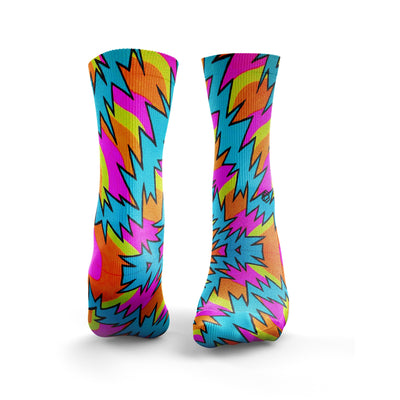
Walk into any strength gym on a Saturday morning and you'll see it: someone pulling a heavy deadlift in nothing but a pair of loud socks. So do you need special weightlifting socks, or are grip socks just a gimmick? The honest answer is "it depends on the lift", and this guide breaks down when grip socks for lifting genuinely help, when they don't, and what to look for in a pair you'll actually want to wear to the gym.
If you just want to see the range, head to our weightlifting socks collection. If you want to know what you're buying first, read on.
What are weightlifting socks?
"Weightlifting socks" isn't a strict technical category. It's a catch-all for socks that lifters choose for the barbell: socks that stay put, cover the parts of your leg that get scraped, feel comfortable under load and, let's be honest, look good in a gym mirror selfie.
In practice, lifters tend to fall into three camps:
- Shoes and regular gym socks: the majority. A comfy athletic sock inside a flat trainer or a lifting shoe.
- Shoes and grip socks: lifters who want their foot locked in place inside the shoe.
- Socks only: mostly for deadlifts and some accessory work, where people want to feel the floor.
Which camp you belong to depends on what you're lifting, the floor you're lifting on and, crucially, what your gym allows.
Why some lifters ditch their shoes
Lifting in socks isn't new. Plenty of people prefer it for deadlifts in particular. The common reasons are simple:
- A flat, close-to-the-floor base. Without a cushioned running shoe underneath you, there's nothing squishy between your foot and the floor.
- A shorter pull. Taking your shoes off means you're standing slightly lower, so the bar has a touch less distance to travel.
- Better feel. Many lifters say they can sense where their weight is through the foot more easily when they're closer to the ground.
We've written more about the trend in the rise of sock-only workouts, if you want the wider picture.
One important caveat before you kick your trainers off: not every gym is happy with it. Some gyms ask members to keep shoes on at all times, for hygiene or safety reasons. Check with your gym or coach first. And remember that a sock won't protect your toes from a dropped plate the way a shoe does.
When grip socks help with lifting
Grip socks have grippy pads on the sole. On a smooth floor, or inside a shoe, that grip stops your foot sliding. Here's where that genuinely matters.
1. Deadlifts in socks on a slippery floor
This is the big one. Ordinary socks on a smooth platform or polished floor can slide, especially on sumo deadlifts, where you're pushing your feet out to the sides. A grip sock gives you something to push against. If you deadlift shoeless, a grip sock is the sock we'd reach for.
2. Feeling locked in inside your shoe
Even with shoes on, some lifters don't like their foot shifting inside the shoe when they drive hard through the floor. Our Pro Performance grip socks feature a fully covered sole with a honeycomb grip design to ensure that all of the foot - Including your toes and heel is in contact with your shoe to ensure 100% stability. If you like a really snug, connected feel, that's the appeal.
3. Explosive lifts and mixed sessions
Plenty of gym sessions aren't pure lifting. You might do a few power cleans, then some lunges, then a sled push. Our Pro Performance range gives you instant feedback with greater control from the floor whether it be from power snatching to changing direction in field sports, which makes it a decent all-rounder if your training jumps around.
When grip socks don't make much difference
Here's the honest bit. Grip socks are great in the right setting, but they're not magic.
- In a well-fitted lifting shoe. If your squat shoes fit snugly and your foot doesn't move, the grip on the sole of your sock is adding very little. A comfy, supportive sock will do the job.
- On rubber gym flooring. Rubber matting is already grippy. You may notice less difference than you would on a smooth platform.
- For bench press and upper-body work. Your feet still matter on the bench, but the grip you need is mostly between your shoe and the floor, not your sock and your shoe.
- As a fix for technique. If your feet are shifting because your stance or bracing is off, no sock will solve that. Get your coach to take a look.
Our take: if you lift in socks, get grip socks. If you lift in shoes, buy the socks you find most comfortable and keep a pair of grip socks for days when you want that locked-in feel.

What to look for in weightlifting socks
Height: think about your shins
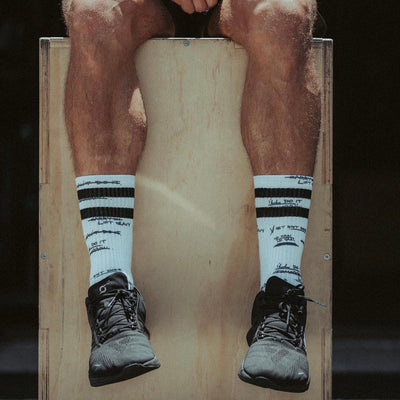
If you deadlift, you'll know the bar likes to travel close to your shins. Plenty of lifters prefer a crew-height or longer sock so there's fabric between the bar and their skin, rather than a scrape on every rep. Ankle and no-show socks look tidy but leave your shins exposed.
A fit that stays put
A sock that slides down into your shoe or twists under your foot is a distraction you don't need under a heavy bar. HEXXEE socks feature a snug, secure fit designed specifically to help 'hug' your foot, and our socks have built-in arch support with plush cloud-like cushioning at the ankle and forefoot to help absorb impact.
Durability
Barbells, knurling and gym floors are rough on fabric. Our socks are made with anti-abrasion fibres deep within the sock, and are designed with four-yarn terry loops to create a supremely soft and supportive sock.
Breathability
Long strength sessions get warm. Look for a sock that lets your foot breathe. Ours have enhanced airflow across the top of the foot.
A bit of personality
You're going to stare at your feet a lot while you set up for a lift. They might as well make you smile. That's the whole reason HEXXEE exists.
Our weightlifting sock picks
Send It White Weightlifting Socks
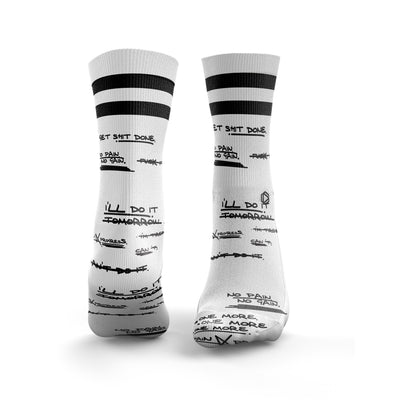
The Send It White Weightlifting Socks are the obvious place to start. These lightweight socks offer extra cushioning and support to help you send it on the heaviest lifts. With extra traction on the sole and toe, you'll be able to stay more stable while lifting so you can stay focused on crushing your PRs.
Lift Heavy Sh*t Weightlifting Socks
No gimmicks. No excuses. Just lift heavy sh*t. The Lift Heavy Sh*t Weightlifting Socks do exactly what they say on the tin, with the same arch support, cushioning and anti-abrasion fibres as the rest of the range. They're made from 80% Dry fit Polyester, 12% Cotton and 8% Elastane.
Marble Pro Performance
If you want proper grip, the Marble Pro Performance socks are our grip sock with a swirl of colour. You get zoned and plush cushioning at the ankle and forefoot to help absorb impact, Terry panels to enhance airflow for improved breathability, and an arch band to offer a snug, secure fit. They're made from 70% Dry fit Polyester, 20% Cotton, 10% Elastane and HEX-TECH' pads made from PVC.
Pro Performance White Pack [X3]
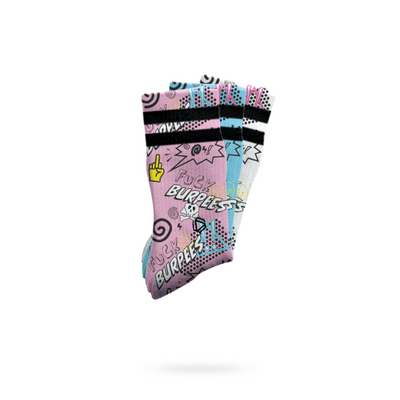
Lifting three or four times a week? The Pro Performance White Pack [X3] gives you unique black gripped pro performance grip socks, now available in a pack of 3, so there's always a clean pair in your gym bag.
Want more choice? Browse every design in our weightlifting socks collection, see the full Performance Enhancing Grip Socks range, or check out our everyday gym socks. If you also do CrossFit, our guide to the best CrossFit socks by movement covers lifting days alongside box jumps and rope climbs.
Looking after your lifting socks
Grip pads last longer when you treat them well. We recommend a machine wash in cold water no warmer than 30 degrees, or a hand-wash in cold water to achieve the best results. HEXXEE socks can be pre-treated with fabric softener and stain remover but NOT bleach or boil, and we recommend hang drying our Pro Performance HEXXEE 3.0 Grip socks rather than tumble drying them.
FAQ: weightlifting socks and grip socks
Do you need special socks for weightlifting?
No, you can lift in any comfortable athletic sock. But a sock with a secure fit, some cushioning and enough height to cover your shins makes heavy lifting days more comfortable. If you lift without shoes, grip socks are worth having.
Are grip socks good for deadlifts?
Yes, if you deadlift in socks. They stop your feet sliding on smooth floors, which matters most on sumo pulls. If you deadlift in shoes, they're a nice extra rather than essential.
Can I lift in just socks at the gym?
That depends on your gym. Some are fine with it, some ask you to keep shoes on. Always check first, and be careful around loaded plates, as a sock won't protect your toes if something drops.
Should I wear grip socks with lifting shoes?
You can. Some lifters like the locked-in feel. If your shoes already fit well and your foot doesn't move, a regular supportive sock is usually enough.
What length of sock is best for weightlifting?
Most lifters prefer crew height or longer, mainly so the bar doesn't scrape their shins on deadlifts. Lower socks are fine for upper-body days.
Whether you're pulling in socks or squatting in shoes, the best weightlifting socks are the ones that stay put, protect your shins and make you want to get under the bar. Find your pair in the HEXXEE weightlifting socks collection and go lift heavy sh*t.