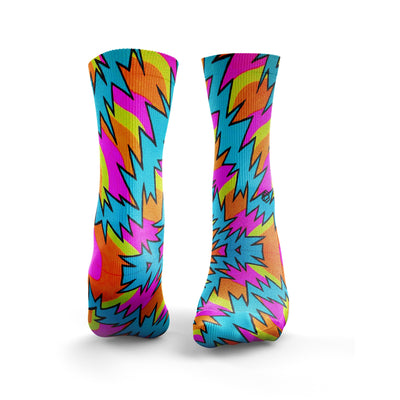
There's a special kind of pain that only CrossFitters know. You finally get your first rope climb, you're buzzing, and then you look down at your shins. Red, raw and stinging. Rope burn: the souvenir nobody asked for.
The good news is that most of it is avoidable. The right socks, a decent technique and a little bit of planning will keep the skin on your legs where it belongs. This guide covers what to look for in rope climb socks, how sock height makes a difference, when grip socks are worth it, and how to look after your legs when the whiteboard says "rope climbs" for the third time this week.
Why rope climbs are so hard on your legs
Most rope climbs use your legs to do a lot of the work. Whether you use a J-hook or an S-wrap, the rope runs down the inside of one leg and gets pinched between your feet. Every time you stand up, squeeze and slide your feet up for the next pull, the rope drags across your shin, ankle and the top of your foot.
Coming down is often worse. If you slide down too fast, the rope rubs hard against whatever skin is exposed. Multiply that by a workout with 10, 15 or 20 climbs and your lower legs are taking a beating.
That's why "rope climb socks" is a thing. It isn't marketing fluff. It's a simple fix: put fabric between the rope and your skin.
What makes a good rope climb sock?
1. Height: cover the shin
This is the big one. The rope mostly makes contact around your ankle, lower shin and the inside of your lower leg. If your sock stops below the ankle, that skin is exposed on every rep.
- No-show and ankle socks: no protection at all on rope day.
- Low cut crew socks: cover the ankle bone, but not much of the shin.
- Crew socks: the minimum we'd recommend for rope climbs. They cover the ankle and the lower shin, which is where most of the friction happens.
- Longer socks or shin sleeves: lots of athletes add these for high-volume rope workouts or competitions.
For most people at most boxes, a good pair from our crew socks collection will handle a normal rope climb session. If you're unsure about height in general, our post on how high your gym socks should be goes into more detail.
2. A snug fit that stays up
A crew sock only helps if it stays where you put it. If the cuff slides down into your shoe halfway through the WOD, you're back to bare shins. Look for a sock with a secure cuff and a snug fit around the foot and arch, so it doesn't creep or twist when the rope pulls on it.
All of our HEXXEE 1.0 crew socks have built-in arch support with plush cloud-like cushioning at the ankle and forefoot to help absorb impact, and a snug, secure fit designed specifically to help 'hug' your foot.
3. A sock that can take some friction
Rope is rough. A thin, flimsy sock will bobble and wear through quickly if it's on the rope every week. A thicker, well-constructed athletic sock holds up better. Our socks are designed with four-yarn terry loops to create a supremely soft and supportive athletic sock, and they're made with anti-abrasion fibres deep within the sock.
4. Breathability for the rest of the workout
Rope climbs rarely come on their own. They're usually sandwiched between runs, wall balls, box jumps or burpees. You still want a sock that copes with sweat and keeps you comfortable. Our 1.0 socks are made from 70% Dry fit Polyester, 20% Cotton and 10% Elastane, with enhanced airflow across the top of the foot.
Crew socks vs shin sleeves vs long socks
Here's an honest take on the main options:
- Crew socks: the everyday choice. Easy, comfy, and enough for a typical class with a handful of climbs. You'll wear them for the rest of the WOD anyway.
- Shin sleeves or guards: great for high-volume rope work and competitions. Many athletes wear them over a crew sock for extra coverage.
- Long socks: some athletes like the full coverage. They can feel hot on running-heavy days, so most people save them for rope-heavy sessions.
Our advice: start with crew socks. If you're still getting burned on longer workouts or in competition, add a sleeve on top rather than switching your whole sock drawer.
Do you need grip socks for rope climbs?
Not for the rope itself. The grip on grip socks is on the sole, which sits inside your shoe, so it isn't what touches the rope. What grip socks do is stop your foot sliding around inside your trainer.
That can still be handy in a rope workout. When you clamp the rope between your feet and stand up, you're pushing hard through your feet, and some athletes like the locked-in feeling of a grip sock for that. Our Pro Performance grip socks feature a fully covered sole with a honeycomb grip design to ensure that all of the foot, including your toes and heel, is in contact with your shoe. If your shoes already fit well and your feet don't move, a regular crew sock is all you need.

How to avoid rope burn (beyond socks)
Socks do a lot of the heavy lifting, but technique matters just as much. A few things that help:
- Learn a solid foot lock. Whether you prefer the J-hook or the S-wrap, a secure lock means your feet aren't constantly slipping and re-gripping, which is where a lot of friction comes from. Ask your coach to check it.
- Come down hand over hand. Sliding down the rope is the fastest way to burn your shins and your palms. Control the descent, keep your feet lightly on the rope and lower yourself with your hands.
- Check your shorts. Very short shorts leave the inside of your knee and thigh exposed on the S-wrap. Something a bit longer, or leggings, can help.
- Don't climb on already sore skin. If your shins are still raw from last time, cover them up properly or scale the movement for the day. Your coach will have options.
- Pick your shoes sensibly. Some shoes grip the rope better than others. A shoe with a firm, grippy midfoot can help your foot lock feel more secure.
Our rope climb sock picks
Rope Star
We had to start here. The Rope Star crew socks carry the tagline "No tangles. No slips. Just flow." They're a classic HEXXEE crew sock, so you get the arch support, ankle and forefoot cushioning and anti-abrasion fibres, plus the right height for rope day. £13.99.
Dope Ropes
The Dope Ropes socks are a Dope Ropes X HEXXEE collab and, yes, they're crew height. Built on the same 1.0 sock as the rest of the range, made from 70% Dry fit Polyester, 20% Cotton and 10% Elastane. £14.99.
White HEXXEE 2Stripe Socks X3
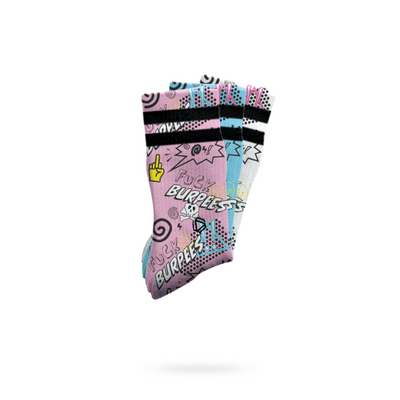
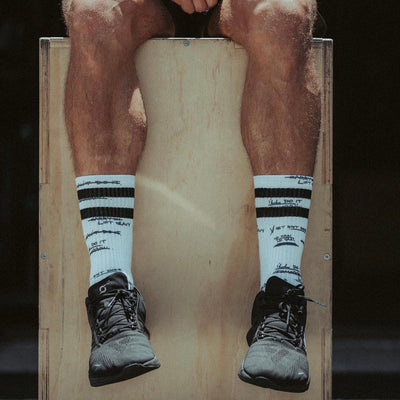
If you're climbing a few times a week, you need a rotation so you're never stuck with a pair of trainer socks on rope day. The White HEXXEE 2Stripe Socks X3 are a fresh update to our original whites, now in a 3 pack, with the same crew height and build. £24.99.
Get Sh*t Done Pro Performance
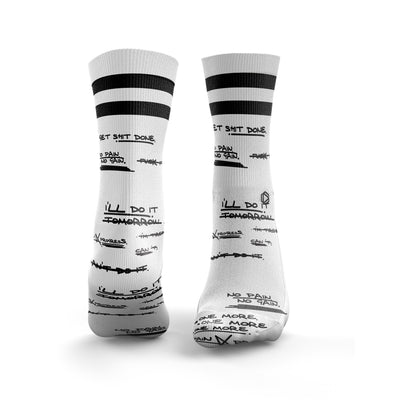
For athletes who like a locked-in foot inside the shoe, the Get Sh*t Done Pro Performance grip socks have zoned and plush cushioning at the ankle and forefoot to help absorb impact, Terry panels to enhance airflow for improved breathability, and an arch band to offer a snug, secure fit. £19.99.
Want more options? Browse the full CrossFit socks collection, or read our guide to the best CrossFit socks by movement for box jumps, double-unders and lifting days too.
Looking after socks that live on the rope
Rope work is tough on fabric, so a bit of care goes a long way. We recommend a machine wash in cold water no warmer than 30 degrees, or a hand-wash in cold water for the best results. Don't bleach or boil them, and hang dry rather than tumble drying. A single pair of HEXXEE socks has the ability to last for two years or longer when looked after and washed correctly, although if yours are on the rope every week, expect them to show some character.
FAQ: rope climb socks
What socks should I wear for rope climbs?
Crew socks at a minimum. They cover your ankle and lower shin, which is where the rope rubs most. For high-volume rope workouts or competitions, many athletes add shin sleeves on top.
Do crew socks stop rope burn?
They help a lot by putting fabric between the rope and your skin, but they can't do everything. A good foot lock and a controlled, hand-over-hand descent make the biggest difference alongside the right socks.
Are grip socks good for rope climbs?
The grip sits on the sole inside your shoe, so it doesn't touch the rope. Some athletes like grip socks for a more secure feel when they stand up on the foot lock, but they aren't essential.
Why do CrossFitters wear long socks?
Mostly for shin coverage on rope climbs, box jumps and barbell work, plus they look great. We've written more about it in why CrossFitters wear crew socks.
Should I wear shin guards for rope climbs?
If your box programmes lots of rope climbs, or you're competing, shin sleeves or guards over a crew sock are a popular combination. For the odd class with a few climbs, crew socks are usually enough.
Rope day doesn't have to end with stinging shins. Get your height right, nail your foot lock, and pick a pair of HEXXEE crew socks that makes you want to climb. See you at the top.