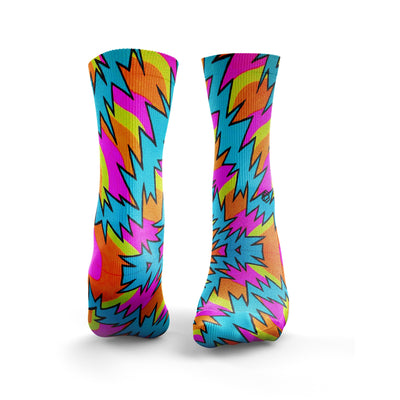
HYROX hurts. That's sort of the point. Eight 1km runs, eight workout stations, and a whole lot of time to think about every tiny thing that's bugging you. The last thing you want on your mind at the 6km mark is a sock that's slipping, bunching or quietly building a blister under your big toe.
So let's sort it. This guide walks through what your feet actually go through in a HYROX race, station by station, then covers sock height, grip vs fit, the timing chip question and how to keep blisters away.
The short answer: what makes a good HYROX sock?
If you only read one section, make it this one. The best socks for HYROX are:
- Snug, not loose. Any spare fabric will fold, bunch and rub over 8km of running and all the stops and starts in between.
- Mostly synthetic. Go for a polyester-led performance blend over a thick, cotton-heavy sock that soaks up sweat and stays wet.
- Supportive through the arch. Something that holds the sock in place when you're pushing, pulling and lunging.
- Cushioned where you land. Heel and forefoot take the beating on the runs and the burpee broad jumps.
- Crew or low cut crew height. More on this below, but ankle-and-above beats no-show for most people.
- Tested before race day. Never, ever debut new socks at the start line.
Want to skip straight to the good stuff? Our HYROX socks collection pulls together the pairs we think work best for hybrid training and racing.
What your feet go through: the runs and all eight stations
A HYROX race is the same format everywhere: 1km run, then a station, repeated eight times. Weights change between divisions, but the movements don't. Here's what each part asks of your socks.
The 8 x 1km runs
This is where most sock problems start. 8km of running, broken up by stations, means your feet heat up, sweat, cool down and go again. A sock that stays put and manages sweat matters more here than anywhere else.
Station 1: SkiErg (1,000m)
You're standing still, but you're hinging and driving through your feet hard. A sock that slides inside your shoe makes the whole thing feel less stable. Arch support and a secure fit help here.
Station 2: Sled Push (50m)
Big forward lean, short powerful steps, and a lot of force through the forefoot. If your foot is shifting inside your shoe, you'll feel it. This is the station where people start thinking about grip socks (we'll get to that).
Station 3: Sled Pull (50m)
Hand over hand on the rope, walking backwards, digging your heels in. The rope ends up on the floor around your feet and lower legs, so a bit of extra coverage from a crew sock doesn't hurt.
Station 4: Burpee Broad Jumps (80m)
Up, down, jump, land, repeat. Lots of impact on the forefoot and heel, and a lot of sliding forward in your shoe on every landing. Cushioning and a snug fit are your friends.
Station 5: Rowing (1,000m)
Feet strapped in, heels lifting and dropping on every stroke. Cuffs that slip down will annoy you here, and so will any seam pressing on the top of your foot under the strap.
Station 6: Farmers Carry (200m)
Heavy kettlebells, short quick steps, and grip strength fading fast. Your feet just need to stay quiet and stable.
Station 7: Sandbag Lunges (100m)
Deep lunges, back knee to the floor, front foot driving you up. Lots of push-off from the forefoot and plenty of chances for a loose sock to twist. Arch support earns its place here.
Station 8: Wall Balls (100 reps)
The finale. Squat, throw, catch, repeat until you never want to see a medicine ball again. By now your feet are hot, sweaty and tired. The sock you chose at the start either feels invisible or feels like sandpaper. No in-between.
Sock height: crew, low cut crew or ankle?
There's no rule that says you have to wear a certain height, but here's how we see it:
- Crew socks give you the most coverage for the sled pull and anything that might scrape your lower legs, and a crew cuff tends to stay put. They're our go-to for racing. Browse the full crew socks collection.
- Low cut crew socks sit just above the ankle. A good middle ground if you like a lighter, cleaner feel on the runs but still want something above the shoe collar. Check out our low cut crew socks.
- No-show socks are the riskiest for HYROX. With all the stop-start running and lunging, they're more likely to slip down under your heel, and they leave your ankle bare against the shoe collar.
Honestly? Pick the height you've trained in and liked.
Grip socks vs a good fit: do you need grip socks for HYROX?
Grip socks get a lot of hype in the HYROX world, so let's be straight about it. If your foot is sliding around inside your shoe on the sled push, the first thing to check is your shoe fit and how you've laced them. If you're a woman struggling to find socks that fit properly, our guide to HYROX socks for women walks through sizing and fit.
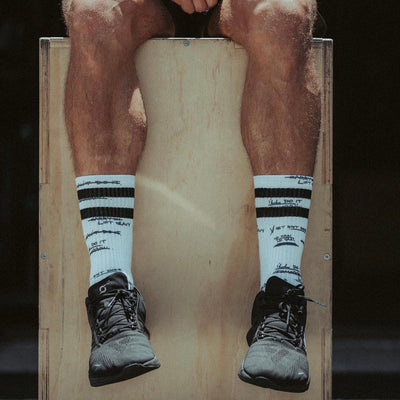
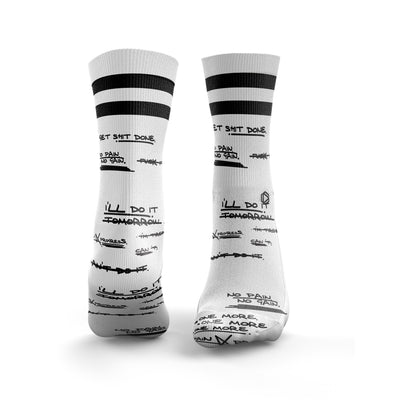
That said, some athletes love the locked-in feel of a grip sock. Our Pro Performance grip socks have a fully covered sole with a honeycomb grip design, so your whole foot, toes and heel included, stays in contact with your shoe. They also have an arch band for a snug, secure fit and terry panels to help airflow. If you want to try them, the Get Sh*t Done Pro Performance pair is a solid place to start.
Our advice: if you're curious, train in them for a few sessions with sled work and runs before you race in them. Some people swear by them, some prefer a regular performance sock. Both are fine.
The timing chip strap
Depending on your event, you might be given a timing chip on a strap to wear around your ankle. If you are, it's worth thinking about your sock height. A strap sitting on bare, sweaty skin for a whole race can rub. A crew or low cut crew sock puts a layer of fabric between the strap and your skin, which is one more reason we lean away from no-show socks on race day.
Timing setups can vary between events, so check your athlete guide before race day so you know exactly what you'll be wearing and where.
How to avoid blisters in HYROX
Blisters come from friction, heat and moisture working together, and our guide to stopping blisters in CrossFit and HYROX goes into each one in detail. You can't remove all three, but you can stack the odds in your favour:
- Wear socks that fit. Too big and they bunch, too small and they pull. Check the size guide rather than guessing.
- Choose an anti-blister build. Our HEXXEE socks are made with anti-abrasion fibres deep within the sock, trialled and tested for long-distance running where rubbing is most common.
- Test your full race kit. Do at least one long session with the exact socks and shoes you'll race in, ideally runs plus a few stations.
- Don't race in brand-new shoes. New shoes and new socks on the same day is asking for trouble.
- Look after your socks. Socks that are washed hot and tumble dried lose their shape faster. We recommend washing HEXXEE socks in cold water no warmer than 30 degrees and hang drying them.
Our HYROX sock picks
Here's what we'd pack in the kit bag:
For race day: Hyrox Hurts
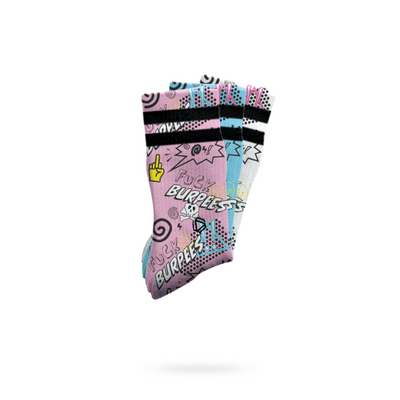
Hyrox Hurts says it all. HYROX hurts. Your socks shouldn't. Like our core performance socks, they've got built-in arch support with plush cloud-like cushioning at the ankle and forefoot to help absorb impact, enhanced airflow across the top of the foot, and a snug, secure fit designed to 'hug' your foot. They're made from a 70% Dry fit Polyester, 20% Cotton and 10% Elastane blend.
For training volume: White HEXXEE 2Stripe Socks X3
Training for HYROX means a lot of sessions and a lot of laundry. The White HEXXEE 2Stripe Socks X3 give you three pairs of classic white 2Stripe socks with the same arch support, cushioning and anti-blister build. Ideal for rotating through the week.
For the locked-in feel: Get Sh*t Done Pro Performance
If you want to try grip socks, this is the pair. Fully covered honeycomb grip sole, arch band, terry panels for airflow, and the zoned cushioning at the ankle and forefoot you'd expect.
For dark winter training runs: Apache Reflective 2Stripe
A lot of HYROX prep happens on dark UK evenings. The Apache Reflective 2Stripe socks have reflective threads within the 2Stripe that reflect car lights, so you're more visible when you're running at night. See the full running socks collection for more reflective designs. For more on staying seen on winter runs, read our guide to reflective running socks.
HYROX socks FAQ
What socks should I wear for HYROX?
A snug, polyester-led performance sock with arch support and cushioning at the heel and forefoot, in crew or low cut crew height. Most importantly, wear a pair you've already trained in.
Are crew socks or ankle socks better for HYROX?
Crew socks give more coverage for the sled pull and a timing chip strap, and they tend to stay put. Low cut crew is a good lighter option. We'd avoid no-show socks for racing.
Do I need grip socks for HYROX?
No, they're optional. Get your shoe fit right first. If you like a locked-in feel on the sleds, grip socks can be worth a try, but test them in training first.
Can I wear the same socks for HYROX and CrossFit?
Yes. The things that make a good HYROX sock, a secure fit, arch support, cushioning and sweat management, are the same things that work in the box. Check out our CrossFit socks too.
Ready to race?
Your training does the heavy lifting. Your socks just need to stay out of the way. Find your race-day pair in the HEXXEE HYROX socks collection, get a few sessions in them, and go and make that wall ball finish line yours.